Wreck Diving in Coron: The Japanese Ships of 1944
5 min read
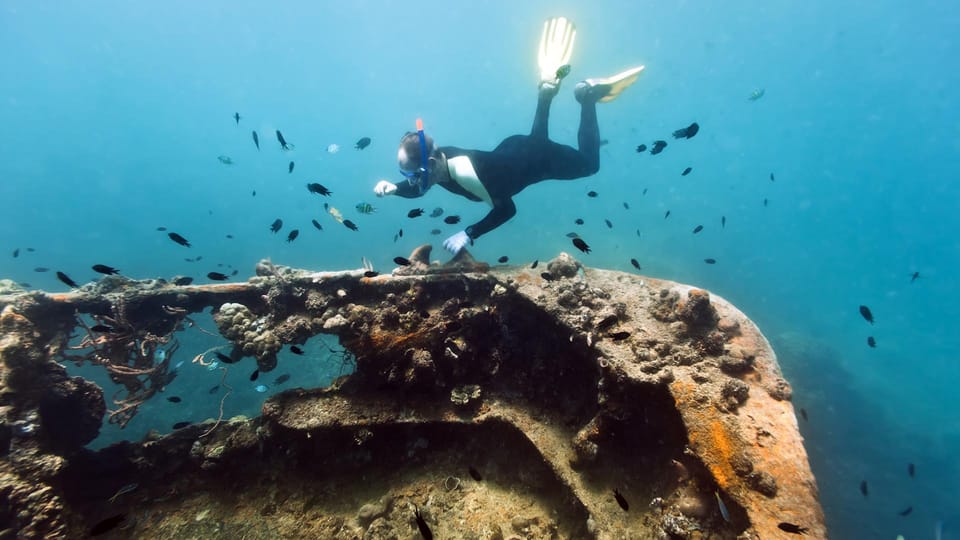
Coron is not one wreck at one depth. The Philippine Department of Tourism presents Coron Bay as a place to dive or snorkel among Second World War wrecks, while the National Museum identifies vessels including Akitsushima, Irako, Okikawa Maru, Kogyo Maru and Olympia Maru as underwater cultural heritage. They were sunk during the US carrier-aircraft attack of 24 September 1944. That history is the reason to choose a proper dive-centre day rather than assume an island-hopping snorkel trip is the same experience. If you are not a certified diver, the 6-hour Reefs and Wrecks snorkelling trip for €36.53 shows shallow wreckage from the surface, with the equipment included.
Shallow viewing and scuba are different products
Skeleton Wreck is a small, shallow site whose ribs can be seen by snorkellers. The Japanese cargo and auxiliary ships in Coron Bay are larger and deeper. A Reefs-and-Wrecks boat trip normally views shallow wreckage from the surface; a scuba day can include descents along a hull and, only when training and conditions allow, more demanding routes.
Do not book from a dramatic photograph alone. Ask the dive centre which wrecks are planned, the maximum depth, whether the dives remain outside the hull, the certification and recent-dive experience required, and the guide-to-diver ratio. A general Open Water card does not automatically make every overhead route suitable. Weather, visibility and the group’s ability may also change the day’s sites.
What a full dive day should clarify
Coron operators commonly combine two wreck dives with a reef or lake dive, but inclusions vary. Confirm tanks, weights, equipment rental, lunch, park or environmental fees, hotel transfer and any surcharge for enriched air before paying. GetYourGuide currently lists 17 wreck-related options from €30.70, but many are snorkelling or island-hopping trips rather than certified scuba dives.
There is no suitable scuba product in our current bookable selection to recommend as a wreck-diving day, so arrange this through an accredited local dive centre. The Philippine Commission on Sports Scuba Diving publishes an accredited-establishment list; use it as a starting point, then ask the centre to match the plan to your certification and recent experience.
Who should choose another trip
If you do not hold the certification requested by the operator, want a relaxed beach day, or are uncomfortable with limited visibility and rusted structures, choose surface snorkelling instead. Never touch a wreck: metal can be sharp and the sites are historical remains, not playground equipment.
For non-divers, the practical alternative is the Reefs and Wrecks snorkelling trip. It lasts 6 hours, names Lusong Coral Garden, Lusong Gunboat and East Tangat Wreck, and includes snorkelling equipment. That gives you the wreck setting without pretending it is a scuba-diving substitute. Groups that want their own boat and pace can book the private reef and wreck trip instead.
Recommendation
Certified divers should book an accredited dive centre only after the centre names the wrecks and confirms that the depths and route match their qualification. Everyone else should take the shallow snorkelling option for €36.53. Coron’s history is visible from both levels, but the training, risks and experience are not interchangeable.